Bedding · Pillow guide
Choosing a Down Pillow by Loft, Fill, and Sleep Position
A pillow is a small landscape beneath the head: a changing mix of loft, softness, and support that can influence how comfortably the neck rests through the night. Down pillows are known for their light, pliable feel, but they are not all alike. The right choice depends on how you sleep, how much elevation feels natural, and how the pillow is built and cared for.
Published November 17, 2026
A small difference in height can matter
Down has an airy, yielding character. Rather than holding the head in one fixed position, it can compress and shift as a sleeper moves. That flexibility is part of its appeal: a down pillow can feel soft and moldable, and its shape can often be refreshed with a shake or a fluff. Yet that same pliability makes the words “soft,” “low,” or “supportive” only a starting point. A pillow that feels comfortable in the hand may settle differently beneath the head.
Loft describes a pillow’s height, especially as it rests on the bed. It is not always a fixed measurement. Fill volume, chamber design, fabric, and the weight placed on the pillow all affect how much height remains in use. A low-profile pillow may suit someone who wants a closer-to-the-mattress feel; a higher-loft pillow may be more comfortable for someone who needs more space between the shoulder and head. Neither is universally better. The useful question is whether the pillow lets the neck feel comfortably supported without forcing the head sharply upward or allowing it to drop too far.
For people comparing bedding in Indianapolis or elsewhere, a careful look at construction can be more informative than a short label. Pillow dimensions tell you the size of the cover the pillow is designed to fit, while descriptions of fill, firmness, and chambers offer clues about how it may behave. When possible, assess a pillow in the position you usually sleep in, and allow time for it to settle rather than judging by a quick squeeze.
What “down” means—and what fill details tell you
Down is the soft, light plumage found beneath the outer feathers of waterfowl. Its clusters can trap air, creating loft without the dense, rigid feel associated with some other fills. In a pillow, down can compress under pressure and expand again when lifted or shaken. That combination of lightness and pliability gives it a distinctive feel, though the exact experience depends on how much fill is used and how it is arranged.
Product descriptions may refer to fill power, fill weight, or the construction of the pillow. These details answer different questions. Fill power is a measure of the volume occupied by a given weight of down under specified testing conditions; it can help indicate loft potential, but it does not by itself determine firmness or how high a pillow will sit beneath a sleeper. Fill weight describes the amount of filling. A construction detail such as a multi-chamber design can indicate that the pillow is divided into sections, potentially helping distribute material and maintain its outline. The result still depends on the particular design and how it feels in use.
Some down pillows combine down with feathers or use layered chambers. Others are designed to be soft and low-profile, while a different construction may feel fuller. Read the materials and care information rather than relying on a single phrase. If sourcing matters to you, look for clear statements about the fill and any sourcing standards or certifications named by the maker. Such claims should be understood according to the scope of the stated standard; a label is not a substitute for reading what it covers.
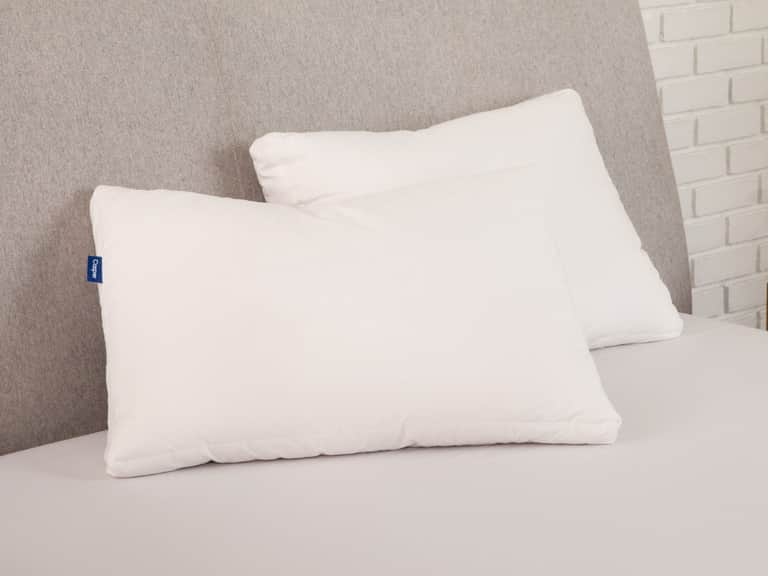
For a concrete example of construction, the Down Pillow Double Pack is described as using ethically sourced down and a five-chamber design, with a soft, low profile. Those details may help a shopper decide whether it is worth considering, but they do not guarantee a particular fit for every body or sleep style. The best test is whether its loft and feel work comfortably with your own sleeping position and mattress.
Match pillow loft to sleep position
Sleep position offers a practical first filter because it changes the space the pillow needs to fill. Shoulder width, head shape, mattress firmness, and personal preference also matter. Use these broad patterns as a way to begin evaluating a pillow, not as a rigid prescription.
Side sleeping: consider more height
When lying on your side, the shoulder creates a gap between the head and the mattress. A pillow with enough loft to occupy that space may feel more supportive than one that collapses too readily. Many side sleepers therefore begin by looking at medium-to-higher profiles or a pillow with enough fill to maintain its height. But shoulder width and mattress softness change the calculation: a broad shoulder or a firmer sleep surface may leave a larger gap, while a softer mattress can allow the shoulder to sink farther.
Notice whether your head feels tipped toward the mattress or pushed upward. A comfortable setup generally keeps the head and neck in a neutral-feeling line with the rest of the body. The pillow should fill the space without creating a pronounced angle. Since down can compress, consider how much height remains after you lie on it for several minutes. Gently arranging the fill may help, but constant bunching to achieve support can be a sign that the pillow’s profile is not a good match.
Back sleeping: look for a middle ground
Back sleepers often prefer enough loft to support the natural curve of the neck without lifting the chin toward the chest. A moderate profile can be a reasonable place to start, though the ideal height varies with the sleeper and the mattress. A pillow that is too full may push the head forward; one that is too flat may leave the neck feeling unsupported. The feel of the pillow under the neck—not just the crown of the head—is worth noticing.
Down’s ability to be molded can be useful for someone who likes to shape a shallow cradle beneath the head or redistribute fill around the neck. The pillow should still feel stable after settling. If it shifts away or flattens quickly, consider whether a different fill amount or construction would better suit your needs.
Stomach sleeping: keep the profile low
Stomach sleepers usually have less space to fill between the head and mattress. A high pillow can turn the head and neck upward at an uncomfortable angle, so a low-profile, soft option may be worth trying. Some people prefer sleeping with little or no pillow under the head, while others want a thin layer of cushioning. Comfort and ease of breathing should guide the choice.
Because down is compressible, a pillow that seems lofty before use may flatten considerably under the head. That can be welcome for a stomach sleeper, but it is still important to see how the pillow behaves once settled. If you change positions during the night, consider which position is most common and whether one pillow can accommodate the range without repeatedly needing adjustment.
Firmness, loft, and support are related—but not identical
Shoppers often use “firmness” and “loft” as if they describe the same thing. Loft is height; firmness is the resistance a pillow offers when compressed. A tall pillow can feel soft and sink substantially, while a lower pillow can feel comparatively dense. With down, the pillow may be soft to the touch yet still provide a particular amount of elevation depending on its fill and construction.
Support is the practical outcome: whether the pillow helps keep the head and neck comfortable in the position you choose. It is not determined by height alone. A pillow that is too soft for one person may suit another who wants a gentle, yielding surface. Likewise, a well-filled pillow may feel too high for a stomach sleeper but useful to a side sleeper. Think of these qualities as a combination rather than a ranking.
The mattress beneath you is part of the equation. On a softer mattress, the shoulder and torso may sink more deeply, changing the distance between the head and the bed. On a firmer surface, the body may settle less. This is one reason a pillow that felt right in a store, guest room, or previous home may feel different after a move or mattress change.
A practical comparison checklist
Before choosing, pause over the details that shape day-to-day use. A simple comparison can prevent a decision based only on a plush first impression.
- Sleep position: Decide whether you usually sleep on your side, back, or stomach, and note if you change positions often.
- Loft and firmness: Look for a profile that seems appropriate, then consider how much it may compress under your head.
- Fill description: Check whether the pillow contains down alone or a blend, and review any stated fill weight or fill-power information.
- Construction: Note whether the pillow uses chambers or another internal arrangement intended to manage fill distribution.
- Dimensions: Confirm the pillow size and make sure you have a compatible pillowcase.
- Care: Read washing and drying instructions before buying. Some pillows require specialized care, and not every cover or fill can be machine washed.
- Protection: Consider a washable pillow protector to reduce direct exposure to skin oils, perspiration, dust, and everyday soil.
- Sourcing and sensitivities: Review sourcing disclosures and materials if these are important to you, and consult a qualified health professional about persistent allergy or breathing concerns.
- Trial and return terms: If available, understand the trial period and return conditions before purchase, particularly because pillow comfort can take more than a brief test to assess.
When testing a pillow, lie down in your ordinary position and relax your shoulders. Give the fill time to settle. Ask whether the head feels balanced, whether you are straining to hold a position, and whether the pillow remains comfortable when you turn. A mirror or another person’s observation can sometimes help you notice a clear angle, but comfort is individual, and a simple visual check cannot diagnose a health issue.
Care that helps preserve shape
Down pillows can lose their airy outline with regular use as fill shifts and compresses. Gentle, routine care helps redistribute it. Follow the maker’s instructions first: washing and drying guidance varies by product, and incorrect care can damage the filling or cover. If the label permits, periodically fluff the pillow by holding opposite edges and giving it a light shake. Avoid treating it as a cushion to be forcefully beaten; the aim is to loosen and redistribute the fill, not stress the seams.
A washable pillow protector adds a practical layer between the pillow and the pillowcase. It can help limit the accumulation of everyday soil and make routine freshening easier, though it does not eliminate the need to clean the pillow according to its instructions. Wash pillowcases and protectors regularly, and let bedding dry fully before putting it back on the bed. A damp pillow can retain moisture, so care should be taken to ensure complete drying whenever washing is permitted.
When a pillow looks flattened, fluffing may restore some of its loft, but not necessarily all of it. Over time, fill and fabric can wear. Persistent clumping, a musty smell that remains after appropriate cleaning, damaged seams, or a shape that no longer feels comfortable can be reasons to reassess it. There is no universal replacement schedule that fits every pillow; use, care, materials, and personal comfort all affect its useful life.
Storage matters, too. Keep a spare pillow in a clean, dry place with room to breathe rather than compressing it for long periods. Avoid storing it damp or in a sealed environment where moisture may linger. These simple habits help protect the fill and make it easier to maintain a fresh sleep surface.
Down compared with other pillow fills
Down is not the only path to a comfortable pillow. Memory foam generally offers a more contouring, shape-retaining feel, while latex tends to feel responsive and springy. Fiber fills, including down alternatives, can offer a familiar softness and may suit people seeking a different material profile. Each type varies in height, density, temperature feel, and care needs, so comparisons should focus on the particular pillow rather than assumptions about an entire category.
Down’s distinctive advantage for some sleepers is its light, adjustable character. It can be fluffed and molded, but it may require more attention to keep its shape than a pillow designed to hold a fixed form. Someone who wants a pillow that stays structured without much rearranging may prefer another construction. Someone who values softness and pliability may find down appealing. Neither preference is a measure of better sleep for everyone.
Consider the whole sleep system as well. A pillow protector, pillowcase fabric, mattress surface, and room temperature all contribute to the experience. A crisp, tightly fitted pillowcase can change how easily a pillow moves; a thick protector can slightly alter its feel. When evaluating a new pillow, use bedding similar to what you have at home so that the comparison reflects ordinary use.
A measured choice, not a perfect formula
Choosing among down pillows is a process of matching details to the body’s preferred resting position. Start with sleep position, then narrow the options by loft, fill, construction, dimensions, and care requirements. Pay attention to how the pillow compresses—not just how tall it appears—and whether its shape remains comfortable as you settle and move.
For side sleepers, more height may help bridge the shoulder-to-head gap; back sleepers often explore a moderate profile; stomach sleepers commonly begin with a lower, softer feel. Those are useful patterns, not rules. Shoulder width, mattress firmness, changing sleep positions, and individual comfort can all shift the answer. A well-chosen pillow should feel natural rather than requiring the sleeper to hold the head in place.
In the end, the best pillow is not the one with the most impressive specification or the fullest appearance. It is the one whose loft, fill, and behavior work together in your actual sleep position—and whose care instructions fit your routine. A few minutes spent reading the details, testing the feel, and protecting the pillow can make the search more grounded and help keep its shape in service for longer.